Midjourney V8: Biggest Update Yet, But Is It Really a Game Changer?
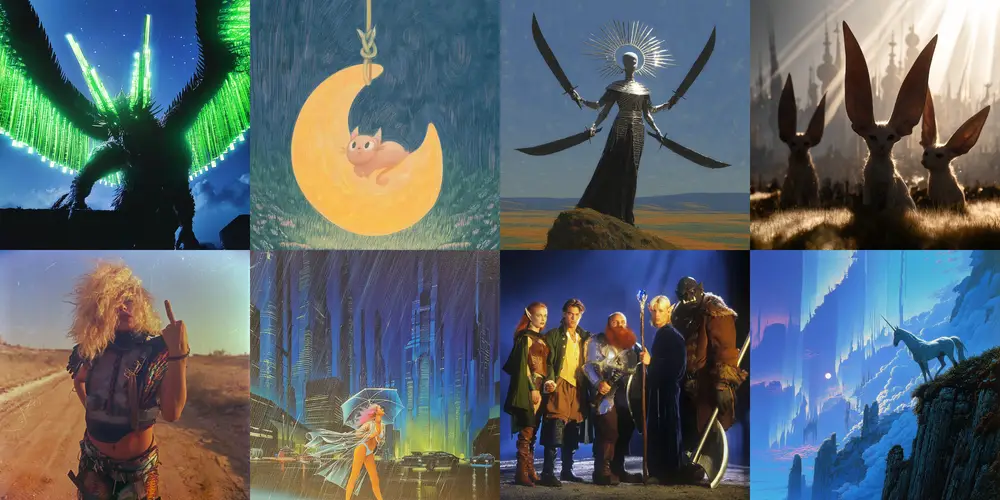
With promises of five times faster rendering, native 2K resolution, improved text generation, smarter prompt understanding, and a refreshed conversational mode, V8 has generated both genuine excitement and measured scepticism across the AI art community. This article brings together what is actually new, how it stacks up against previous versions, and what creators and users are really saying about it.
What Is Midjourney V8 and When Did It Launch?
Midjourney V8 Alpha became available on March 17, 2026 at alpha.midjourney.com, accessible to all active subscribers ahead of a wider public rollout. Unlike a standard fine-tune of an existing model, V8 represents a near-complete architectural rethink. The training pipeline, the way the model reads prompts, and the default aesthetic output have all changed in meaningful ways. This is not V7 with a few tweaks. It is a fundamentally different engine.
What Is New in Midjourney V8?
Rendering Speed: 5 Times Faster
The speed improvement is immediately noticeable. What previously took 30 to 60 seconds in V7 now completes in under 10 seconds in V8. In live tests, fully rendered image sets appeared in less than 5 seconds from prompt submission. For anyone generating large volumes of images, whether for client work, concept development, or iterative exploration, this alone represents a major quality-of-life upgrade.
Native 2K Resolution via HD Mode
V8 introduces native HD rendering, allowing users to generate images at 2K resolution without relying on upscaling. The model is trained for high-resolution output, meaning detail at 2K is genuinely sharper rather than artificially interpolated. One important note: Relax mode is not yet supported in V8, so all HD rendering draws from monthly fast-hour allocations. Additionally, premium features like HD and the new quality settings cost significantly more per generation, which has drawn criticism from budget-conscious users.
Improved Text Rendering
Text generation inside images has historically been one of Midjourney's most glaring weaknesses. V8 makes a meaningful step forward here. Short text strings, words on signage, labels, and typographic elements placed in quotation marks within prompts now render with noticeably higher accuracy. Longer full sentences remain less reliable, but the progress is real and widely acknowledged by early testers.
Better Anatomy and Human Figures
Hand generation, the long-standing problem across AI image models, has improved substantially in V8. The rate of obviously broken hands, extra fingers, and twisted limbs is significantly lower than in V6.1 and earlier. This improvement extends to facial proportions, full-body poses, and multi-figure compositions. For commercial, editorial, or character-focused work, V8 is considerably more dependable in this area.
Sharper Prompt Understanding
V8 follows complex, multi-element prompts with a precision that earlier versions lacked. Specific colour palettes, spatial arrangements, lighting conditions, and material textures now appear in outputs with higher fidelity to the original prompt. Where V7 was an interpretive and impressionistic model that could work magic with short, vague prompts, V8 operates more like a precise executor. The Midjourney team itself recommends leaning into longer, more detailed prompting to get the most out of the new model.
Updated Conversational Mode with Voice Input
V8 brings an updated conversational mode that allows users to shape and refine images through natural language, including via voice input. Rather than needing a perfectly crafted prompt upfront, users can start with a rough idea and progressively refine it through back-and-forth instructions. This makes the creative process more exploratory and accessible, particularly for newcomers or for sessions where the goal is experimentation rather than precision.
Interface and Workflow Upgrades
A new grid view allows users to focus on a single expanded set of images at a time. The settings panel has been moved to the right-hand side of the interface so it no longer obscures the working area. These are modest but welcome changes, and they reinforce Midjourney's reputation for having one of the cleaner, more enjoyable interfaces in the AI creative space. The community image browser, which many users rely on for visual inspiration, remains one of the platform's most praised features.
Midjourney V8 vs V7: Pros and Cons
Where V8 Comes Out Ahead
Speed Is Transformative
The five-times rendering speed improvement changes the texture of creative work. More iterations, faster feedback loops, and less time waiting all add up quickly for serious users.
Text and Typography Are Finally Reliable
For any work involving branded content, signage, typographic design, or text overlays, V8 is a genuine step up. This was a persistent frustration for years, and the improvement is real.
Human Anatomy Is More Dependable
Fewer anatomical errors means less post-processing and correction time. For portrait work, character design, and human-centred imagery, V8 is more reliable out of the box.
Complex and Cinematic Scenes Shine
In direct comparisons on demanding prompts, such as cinematic portraits, dramatic lighting set-ups, elaborate fantasy environments, and highly detailed compositions, V8 frequently delivers the more compelling result. Its natural colour grading and visual cohesion in high-detail situations are a genuine strength.
Tighter Style Reference Fidelity
V8 applies style references (sref) with greater accuracy, more closely matching the colour treatment, texture, and lighting approach of the reference image. For maintaining visual consistency across a body of work or matching a specific photographic style, this is a meaningful advantage.
Where V7 Still Holds Its Ground
The Artistic and Painterly Quality Is Harder to Reach
V7 delivered those warm, stylised images with a painterly, mood-rich quality almost automatically. V8 is more like a camera: sharper, more neutral in tone, and closer to photographic hyperrealism. The recognisable Midjourney aesthetic that many users loved is less inherent in V8 and requires more deliberate effort to achieve.
The Jump in Quality Is Not Always Obvious
For standard portrait and landscape work, side-by-side comparisons between V8 and V7 can be surprisingly close. The improvements in V8 tend to surface most clearly in demanding, high-detail scenarios rather than in everyday generations.
Stylisation Range Feels Narrower
The effective range of the stylize parameter has reportedly narrowed compared to V6.1. Very high stylize values, which used to produce dramatically different and experimental outputs, now deliver less radical variation. Users who relied on the extremes of this dial for distinctive creative effects may find V8 more conservative.
V7 Prompts Need Recalibrating
Because V8 reads prompts differently, short or impressionistic prompts that worked beautifully in V7 can produce underwhelming results in V8. The model's shift toward literal instruction-following means there is a learning curve when transitioning from an established V7 workflow.
Premium Features Cost Significantly More
Standard V8 generations are covered by existing subscriptions, but premium features including HD mode and the quality settings cost up to four times more per generation in fast-hour terms. For high-volume users or those with budget constraints, this has been a notable friction point.
No Draft Mode in Alpha
V8's alpha currently lacks an equivalent to Draft Mode, which is a real drawback for users who relied on it for rapid, low-cost ideation in earlier versions.
Community Opinions and Feedback on Midjourney V8
The General Mood: Interested but Split
Community reaction to V8 has been genuinely divided. There is real enthusiasm for the speed gains and technical improvements, but that enthusiasm is tempered by concerns about the shift in aesthetic character, the cost of premium features, and the inconsistency that comes with an alpha release.
Discussions across the Midjourney community on forums and social platforms reflect a recurring tension: users who built careful workflows around V7 are finding that V8 does not simply pick up where they left off. It requires a different prompting approach, a different aesthetic expectation, and in some cases a willingness to accept that V8 will not produce the same kinds of outputs as its predecessor.
Praise for Speed and Technical Improvements
Speed improvements are the most consistently praised change in early feedback. Users working on projects that require many iterations have noted that near-instant rendering times fundamentally change the creative rhythm. Text generation accuracy and improved anatomy are also regularly cited as meaningful gains, particularly by users whose work has been hampered by these limitations in the past.
Frustration with Inconsistency
One of the most discussed pain points in the community is inconsistency. V8 is still in alpha, and outputs can range from impressive to unexpectedly poor depending on the prompt and context. Some users report that the same prompt produces strongly differing results across generations in V8 in a way that feels less controlled than V7. The architectural rethink means the model is still being shaped by real-world usage data, and some of the roughness is acknowledged as expected for alpha software.
The "Going Back to V7" Conversation
A visible thread of conversation in the community involves creators returning to V7 for certain types of work. This is not a wholesale rejection of V8, but rather a reflection of the fact that V7's warm, stylised, and painterly outputs suit some creative needs better than V8's more camera-like realism. Some users describe V8's outputs as visually flat or lacking the creative spark that made earlier versions feel distinctive. Others find the shift toward photographic precision exactly what they were looking for.
Concerns About Cost and Access
Pricing has emerged as a friction point. The premium cost multiplier on HD mode and certain quality settings has drawn criticism, with users pointing out that heavy use of V8's most capable features can burn through fast-hour allocations much faster than equivalent work in V7. The fact that V8 is currently only available via the alpha website, rather than through the familiar Discord workflow, has also disrupted established pipelines for some users.
Appreciation for the Platform and Interface
Even among those who have reservations about V8's outputs, the platform itself continues to receive strong praise. The grid view update, the repositioned settings panel, and the community image browser are widely appreciated. Midjourney's interface is frequently described as one of the most enjoyable in the AI creative space, and that reputation remains intact with V8.
How Does Midjourney V8 Compare to Other AI Image Models?
V8 vs Flux
The most common comparison being drawn is between Midjourney V8 and Flux. The two models represent different aesthetic philosophies. Flux leans toward naturalism, with a documentary, grounded look, high anatomical accuracy, and naturalistic colour rendering. Midjourney V8 leans toward the cinematic and the symbolic, with rich colour grading, strong compositional instinct, and an almost surreal sense of aesthetic refinement.
For ultra-realism and precise control, Flux currently holds an edge. For artistic vision, creative exploration, and stylised concept work, Midjourney V8 is the stronger tool. Many experienced creators have settled on using both in tandem: generating an initial visual language and aesthetic in Midjourney, then bringing those images into Flux for editing, refinement, and world-building.
V8 vs Other Competitors
Comparisons with other models such as Krea show a similar pattern. Competitors tend to skew toward naturalism and photographic accuracy, while Midjourney V8 retains a more ethereal and refined appearance. For users whose work lives in the space between art and commercial imagery, such as editorial photography, conceptual advertising, and stylised portraits, V8's aesthetic strengths remain a genuine differentiator.
Final Thoughts: Is Midjourney V8 Worth Your Attention?
The Honest Takeaway
Midjourney V8 is a real step forward, but not a revolution for every use case. The improvements in speed, text rendering, anatomy accuracy, and native 2K output are tangible and genuinely useful. The architectural rethink has produced a model that is more precise, more technically capable, and better suited to complex, detailed compositions than what came before.
At the same time, the gap in raw visual quality between V8 and V7 is not dramatic for everyday generations. We are at a point in AI image development where realism is already very high and incremental gains are harder to perceive. The most meaningful differences in V8 emerge in demanding scenarios: intricate lighting, multi-element compositions, text-heavy images, and highly specific prompts.
Who V8 Works Best For
Midjourney V8 is at its strongest when the goal is cinematic, technically precise, or artistically rich work. Its colour grading instinct, compositional confidence, and improved style reference fidelity make it a compelling tool for concept artists, art directors, and creative professionals who want a model with genuine aesthetic intention built in.
Who Might Want to Proceed Cautiously
If photorealistic output is the primary need, or if a carefully tuned V7 prompting workflow is central to daily work, V8 will require an adjustment period. The model's shift toward literal precision means that short, mood-driven prompts may underperform compared to V7. Budget-conscious users should also factor in the premium costs associated with HD mode and advanced quality settings before committing to heavy use.
The Bigger Picture
What V8 confirms is that Midjourney remains one of the most creatively distinctive tools in the AI art space. Not the most photorealistic. Not the most flexible in every scenario. But consistently one of the most aesthetically intentional, and for many creators that is exactly what matters. V8 is still in alpha and is being actively shaped by community feedback. Given how much has already changed, the full release will be well worth watching.