daVinci-MagiHuman: The Open-Source AI Model for Realistic Video
What Is daVinci-MagiHuman?
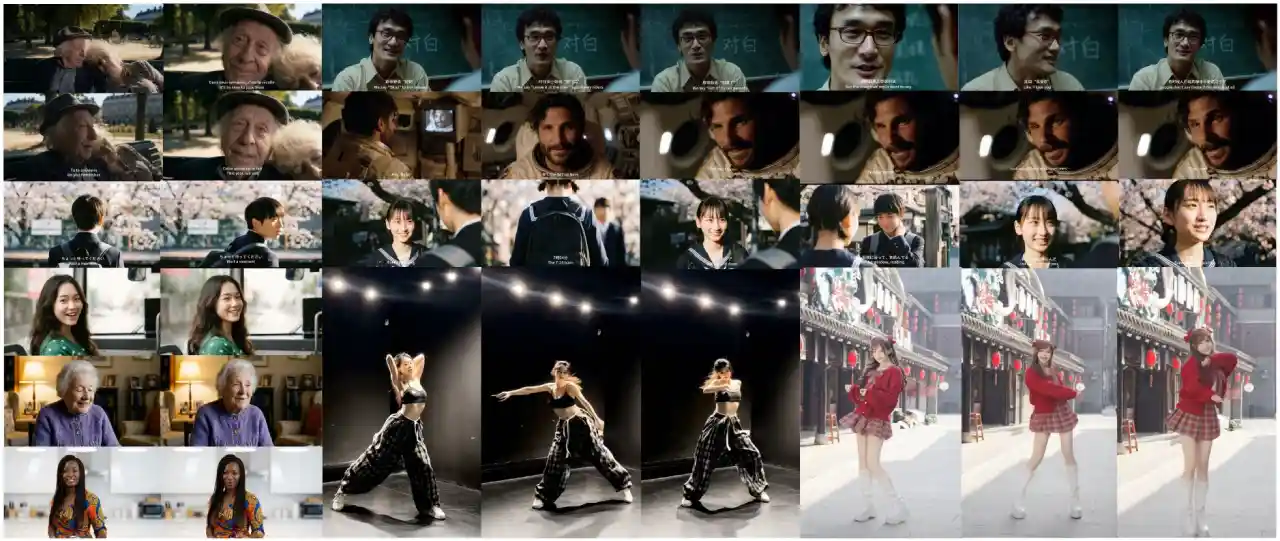
The world of artificial intelligence video generation just gained a powerful new contender. daVinci-MagiHuman is an open-source AI model designed to produce lifelike human videos, complete with synchronized speech, natural facial expressions, and realistic body movements. Released under a permissive Apache 2.0 license, this project is reshaping expectations for what freely available video models can achieve.
daVinci-MagiHuman is a large-scale audio-video generation model developed through a collaboration between SII-GAIR and Sand.ai. At its core, the model is designed to create realistic talking-head videos where the voice, lip movements, and facial expressions all feel naturally connected rather than stitched together after the fact.
A Unified Approach to AI Video Generation
What makes daVinci-MagiHuman distinctive is its unified design. Instead of handling text, audio, and video as separate streams that must later be aligned, the model processes all three modalities together from the start. This "single-stream" philosophy simplifies the pipeline and helps eliminate the awkward mismatches that often appear in AI-generated avatars.
A Focus on Human Realism
The model is tuned specifically for human subjects, with an emphasis on expressive performance, coordinated head movements, and accurate lip-sync. The output is engineered to feel like a real person speaking rather than a stiff digital puppet.
Key Features and Capabilities
daVinci-MagiHuman brings together several capabilities that, taken together, make it a notable release in the open-source AI video space.
Dual Generation Modes
The model supports two primary ways of creating content, giving users flexibility depending on the input they want to work from.
Text-to-Video (T2V)
Users can generate complete videos from a written prompt alone. The model interprets the description and produces a matching human video with synchronized audio.
Text-Image-to-Video (TI2V)
For more targeted results, the model can also be conditioned on both a text prompt and a reference image. This allows creators to guide the appearance of the subject while still letting the model animate speech and expression.
Multilingual Support
daVinci-MagiHuman is built for a global audience. It supports multiple languages, including Mandarin Chinese, Cantonese, English, Japanese, Korean, German, and French. This broad linguistic coverage opens the door to international content workflows and cross-cultural applications.
Speed and Quality
Performance is another area where the model stands out. On an H100 GPU, it can generate a five-second 256p video in roughly two seconds and a 1080p video in about 38 seconds. Human evaluators have also rated its output favorably against competing systems in large-scale comparison tests, reporting strong win rates in head-to-head reviews.
Why It Matters for Creators and Developers
Open-source releases of this caliber tend to move the entire industry forward. By making weights, code, and documentation freely available, daVinci-MagiHuman lowers the barrier to entry for anyone who wants to experiment with high-quality AI video.
Use Cases and Applications
The model is well positioned for a wide range of scenarios. Content creators can use it to produce avatar-driven videos and localized content in multiple languages. Researchers gain a capable baseline for studying audio-visual generation, alignment, and evaluation. Developers building digital human products, virtual presenters, or educational tools get a strong foundation to build on without licensing friction.
Accessibility for the Wider Community
Because the model is released under the Apache 2.0 license, individuals, startups, and larger organizations can integrate it into their own projects with clear and flexible terms.
Open Source Availability
The full package, including model weights, source code, and documentation, is available on the project's GitHub repository and HuggingFace. This transparency is a meaningful signal: rather than gating capabilities behind closed APIs, the team has chosen to share its work so the community can inspect it, build on it, and improve it.
A Sign of Where AI Video Is Heading
daVinci-MagiHuman reflects a broader trend toward unified, end-to-end models that handle multiple modalities inside a single system. As open-source video generation continues to mature, releases like this make it easier for the community to push the state of the art forward together.
Final Thoughts on daVinci-MagiHuman
daVinci-MagiHuman is a meaningful step for open-source AI video generation. Its unified architecture, multilingual reach, strong performance numbers, and permissive license combine to make it attractive for a wide audience, from independent creators to enterprise research teams. For anyone tracking the evolution of realistic AI avatars and talking-head generation, this is a project worth keeping an eye on.
Sources and Further Reading
GitHub repository: https://github.com/GAIR-NLP/daVinci-MagiHuman?tab=readme-ov-file
Official website: https://davincimagihuman.com/