GLM 5.2 vs Opus 4.8: Is the Cheaper AI Coding Model Worth It?
A new coding model is making people rethink how much they should pay for top tier AI. In one head to head experiment, six builds that would have cost around $55 on Opus 4.8 came in at roughly $11 on GLM 5.2. That is the same work for about a fifth of the price, and the quality gap was far smaller than the price gap would suggest.
This article pulls together two recent looks at GLM 5.2: a real world build off against Opus 4.8, and an overview of what the model actually offers. The goal is simple, to help you understand whether a much cheaper model can stand next to a frontier one.
What GLM 5.2 Actually Is
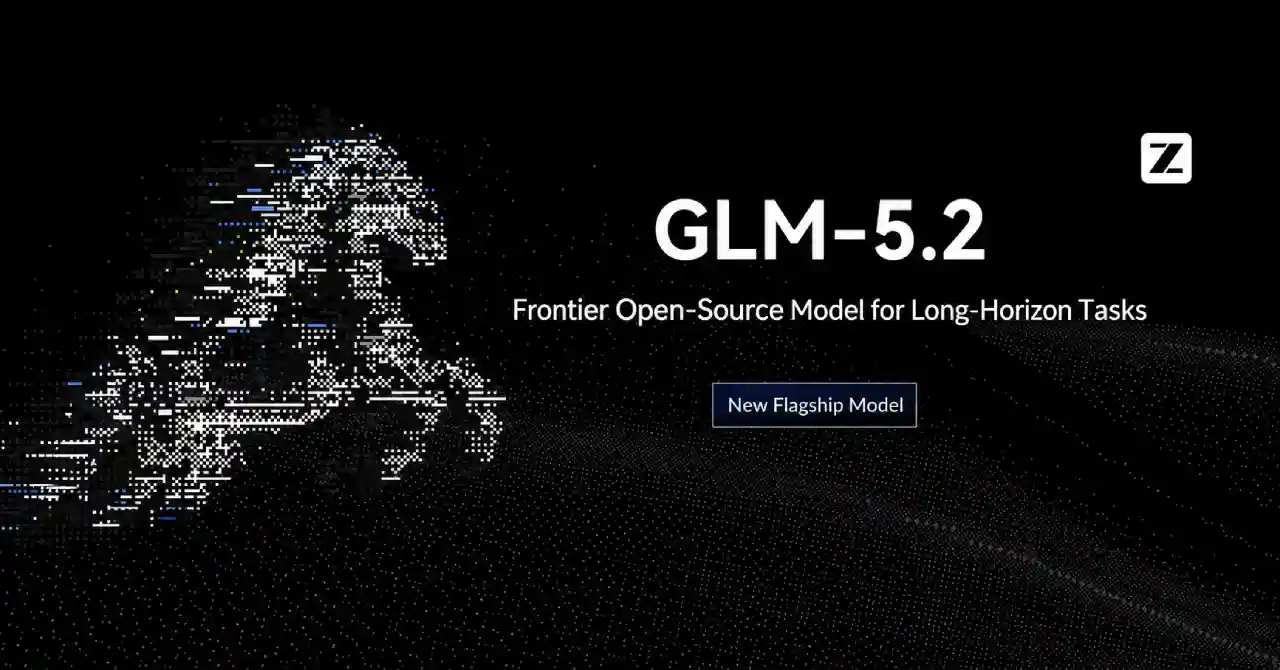
GLM 5.2 is the newest model from Z.ai, the international name for Zhipu AI, a company based in Beijing that has been shipping models at a fast pace. The release landed on June 13th and quickly picked up a reputation for being unusually capable for its price.
The headline feature is a context window of one million tokens. In plain terms, the context window is the model's short term memory, or how much it can hold in mind at once. Many models lose the thread halfway through a large job and start forgetting earlier details. With a million tokens, GLM 5.2 can hold an entire project, a pile of notes, and a long history all at the same time, and keep working without dropping important context.
It is built as a coding first model, tuned for long jobs that run across many steps without falling apart. That focus on endurance, rather than quick one off answers, is a big part of why it has drawn attention.
Access and Open Source
GLM 5.2 went live to everyone on the GLM coding plan across every tier, so anyone already subscribed has access at no extra cost. A standalone API and a chatbot version followed shortly after, and the model is set to be released under the permissive MIT open source license. That kind of open license lets people run, study, and build on top of the model without asking permission, which usually means tools and guides appear quickly.
One honest note worth keeping in mind: detailed benchmark numbers were not published at launch. So the early enthusiasm rests on what the model is built for and how it performs in hands on testing, rather than on official scores.
The Cost Story
Across the set, the recurring theme was a roughly five times difference in price for results that were often very close, and occasionally indistinguishable. Opus 4.8 frequently produced the most polished single output, especially where visual accuracy mattered most. But GLM 5.2 repeatedly matched it closely enough that, once price entered the picture, a couple of extra prompts on the cheaper model felt like an easy trade.
The takeaway is not that one model wins everything. It is that the quality gap is now small enough that cost becomes a deciding factor for a lot of everyday building.
Beyond a Single Model: Working in Teams
A model on its own is just a model. Some of the most interesting use of GLM 5.2 comes from connecting it to an agent system so it can actually carry out tasks, and from running several agents together as a small crew.
Why a Team Beats a Single Chat
A common setup uses a researcher agent to dig into a topic, a writer agent to turn findings into something readable, and a judge agent to review the work and send it back until it meets the bar. The judge is the quiet hero here. Chatting back and forth with a single model gives you one answer with no push back. A judge agent keeps the work being checked and improved without anyone babysitting it, which tends to raise the overall quality.
The Setting Most People Get Wrong
One small detail makes a big difference. GLM 5.2 has two thinking levels, high and max. High is the default, but for serious building work the recommendation is to switch to max. Many people leave it on the default and then wonder why the results are not as deep as they expected.
Where the Long Memory Pays Off
The million token context shines in this team setup. You can load a large stack of material at once, old notes, scripts, and open questions, and let the model work across the whole thing without forgetting where it started. With a short memory model you are constantly pasting the same context back in. With a long one, you set it up once and it keeps the whole picture, which means less repetitive work and far fewer moments where a forgotten detail quietly breaks everything.
Who This Is Really For
This is not only for engineers. It fits anyone who makes content, builds small websites or tools, or simply wants a setup that keeps working while they focus on something else. Some of it looks technical at first glance, but the heavier lifting is in the initial setup, and that gets easier as more people share what they have learned. Because the model is heading toward an open license, the surrounding tools and guides are likely to keep improving quickly.
The Bottom Line
GLM 5.2 is a genuinely significant release. A one million token context, a coding first design, broad availability through the coding plan, and an open source path all add up to a model that punches well above its price. On its own it is strong. Paired with a team of agents, it goes further still.
The most useful conclusion from the head to head is also the simplest. The cheaper model is now close enough in quality that, for a large share of real work, the five times saving is no longer a compromise. It is just a smarter default.