GIMP 3.2 Released: What's New in This Major Update
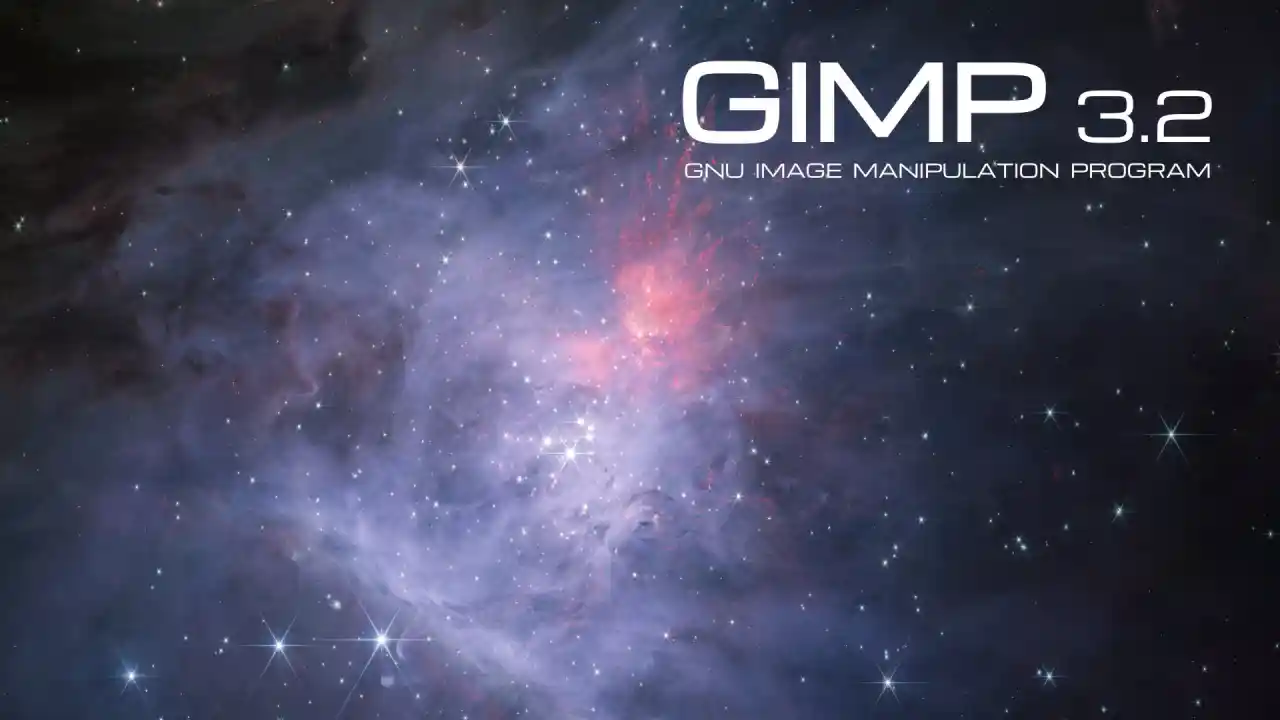
Known formally as the GNU Image Manipulation Program, GIMP has been a go-to Photoshop alternative for decades, available at no cost on Windows, Mac, and Linux. Version 3.2 delivers a substantial set of improvements that make it feel more modern, more capable, and more competitive than ever.
A New Era for Open-Source Image Editing
GIMP has long occupied a unique position in the creative software landscape: powerful enough for professional use, yet entirely free and community-driven. With this release, the development team has addressed several longstanding limitations while pushing the software forward in meaningful ways. The headline themes are non-destructive editing, enhanced painting tools, live filters, interface refinements, and broader file format support.
Non-Destructive Editing Takes Center Stage
The central focus of the GIMP 3.2 roadmap was non-destructive layers, and this release delivers on that promise with two brand-new layer types that change how users can work with their compositions.
Link Layers
Link Layers allow users to incorporate external images directly into a composition. These linked elements can be scaled, rotated, and transformed freely without any permanent loss of quality. The concept is similar to linked smart objects found in other professional tools, giving designers far greater flexibility when assembling complex layouts.
Vector Layers
Vector Layers bring a new dimension to GIMP's drawing capabilities. Users can now create shapes on their own dedicated vector layers, complete with adjustable fill and stroke settings. The layer shape updates automatically whenever the underlying path is modified, and users can rotate, scale, and transform it non-destructively. Color and pattern swatches can even be dragged and dropped directly onto a vector layer to change its fill instantly. For those who eventually need pixel-level control, these layers can be rasterized at any time.
Painting Tools Get a Meaningful Upgrade
Overwrite Paint Mode
A new Overwrite paint mode has been added to the brush tools. In standard painting modes, colors can blend with underlying layers based on opacity and alpha channel values. Overwrite mode bypasses this behavior entirely, ensuring that the painted color appears exactly as chosen, with no blending or transparency interaction. This is particularly useful for pixel art workflows, where precise color placement is essential.
An Expanded MyPaint Brush Library
The MyPaint Brush tool has been updated to version 2.0 of the underlying engine and now includes 20 new brushes. The brush system also automatically adjusts to the canvas zoom level and rotation, making it more responsive during detailed work. Among the additions is an arrow brush, which is well suited for annotation and diagramming tasks.
Non-Destructive Filters and Live Effects
Building on the non-destructive foundation introduced in GIMP 3, version 3.2 brings further improvements to live filters. Filters can now be applied to all non-destructive layer types. When an empty layer is set to pass-through mode, any non-destructive filter applied to it will affect all layers beneath it, effectively recreating the adjustment layer workflow familiar to users of other professional applications. Multiple filters can also be stacked on the same layer group to produce complex layered effects.
A new Vibrance filter has also been added, combining saturation and hue-chroma adjustments to allow for selective color enhancement without affecting the entire tonal range of an image.
Text Editing Receives Long-Awaited Improvements
Text handling in GIMP has historically been a source of frustration for many users. Version 3.2 introduces several welcome refinements to the on-canvas Text Editor. Standard keyboard shortcuts such as Ctrl+B for bold and Ctrl+I for italics are now supported, bringing the experience in line with what users expect from any modern text tool. The text box can also be repositioned more easily, and pasting without formatting is now possible via Shift+Ctrl+V. The outline feature has also been expanded, now supporting centered, outer, and inner outline styles.
User Interface and Usability Enhancements
Smarter Controls and Faster Navigation
GIMP 3.2 includes a range of small but meaningful usability improvements. Users can now switch quickly between the two most recently used tools by pressing Shift+X. The Flip and Shear tools now respond to arrow keys, consistent with the behavior of the Move and Rotate tools. When creating a layer mask, a new persistent checkbox allows users to immediately begin editing the mask without additional steps. The Delete button in the layer panel is now context-sensitive, so it will delete a layer mask when one is selected rather than always deleting the entire layer.
System Color Scheme Integration
A new System color scheme option allows GIMP to automatically match its interface color to the theme set at the operating system level. This makes the application feel more integrated within dark mode or light mode desktop environments. Brush thumbnail previews are now also theme-aware, improving visibility in dark-themed setups.
Additional Interface Touches
Further refinements include improvements to the welcome dialogue, the ability to drag and drop images onto tabs to open them, new keyboard shortcuts for the Shear and Flip tools, and an updated CMYK color selector that now displays Total Ink Coverage information. A new GEGL Filter browser has also been added to help developers and advanced users locate filters for scripting and plugin development.
Expanded File Format Support
Formats for Retro Game Developers
One of the more niche but noteworthy additions in this release is support for PVR texture formats used by the original PlayStation and Dreamcast consoles. For developers working on retro game preservation, homebrew projects, or period-accurate texture work, this is a welcome inclusion that few other tools offer out of the box.
Broader Industry Format Support
Beyond retro formats, GIMP 3.2 expands its compatibility across the board. New additions include DDS BC7 export, improved PSD layer styles import, a new SVG export option, expanded PDF vector support, and added support for JPEG 2000. These improvements make GIMP a more viable tool in professional pipelines that involve a variety of file types and cross-application workflows.
Where to Get GIMP 3.2
GIMP 3.2 is available as a free download from gimp.org for Windows, Mac, and Linux. As an open-source project, it also welcomes contributions from developers, designers, and translators who want to help shape its future. Whether you are a digital artist, a pixel art creator, a game developer, or simply someone looking for a capable and cost-free image editor, this release offers a compelling reason to take a closer look.